Toys Without Frontiers
Despite Western media’s dismissal of them as mere propaganda, the Iranian LEGO videos have a long and complex genealogy.
By Hamid DabashiJune 14, 2026

Did you know LARB is a reader-supported nonprofit?
LARB publishes daily without a paywall as part of our mission to make rigorous, incisive, and engaging writing on every aspect of literature, culture, and the arts freely accessible to the public. Help us continue this work with your tax-deductible donation today!
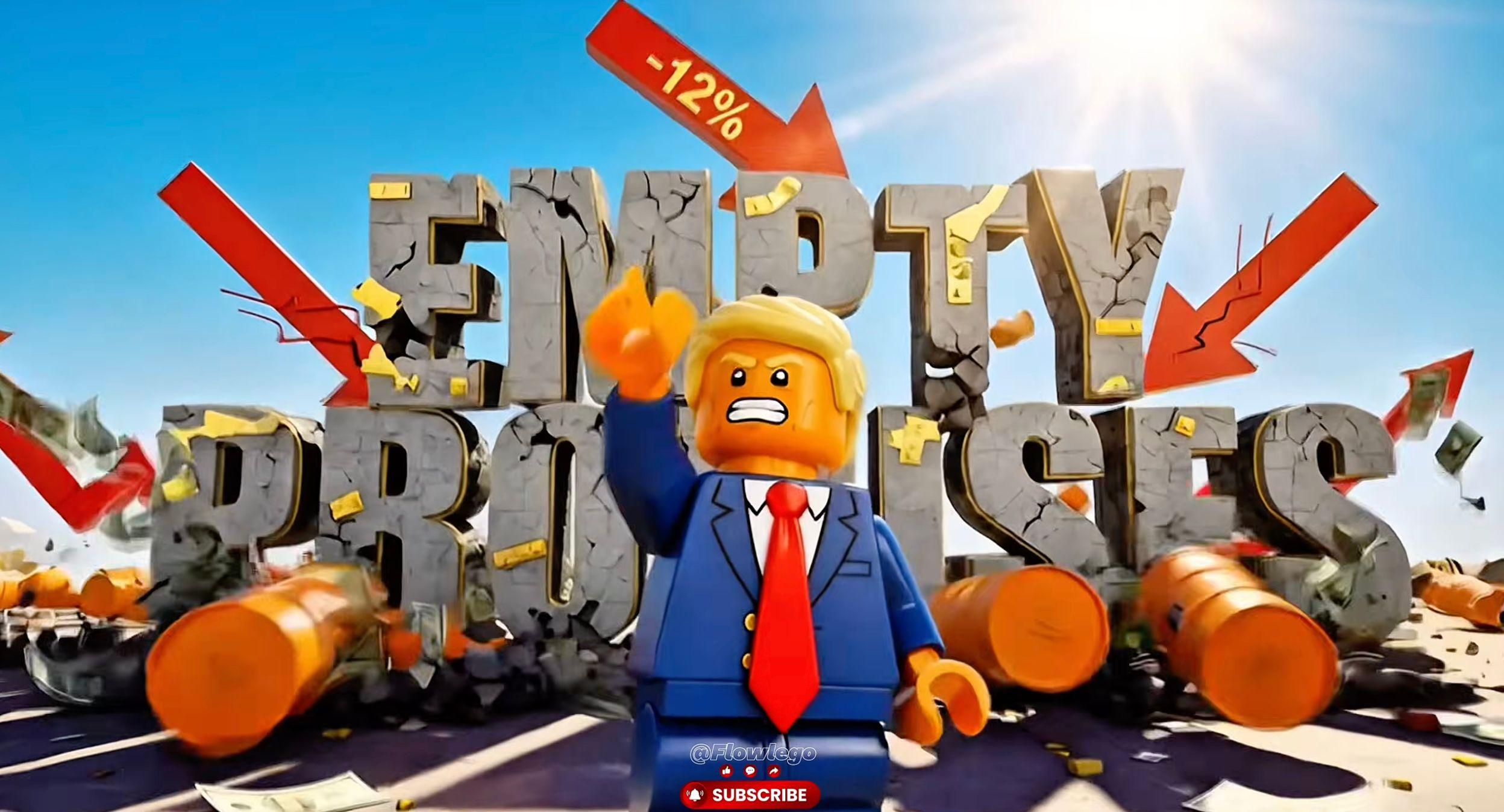
WITHIN DAYS OF THE Israeli and American strikes against Iran that began on February 28, short, animated video clips started to surface online and spread through social media. Featuring LEGO minifigures, these videos targeted Benjamin Netanyahu and Donald Trump with biting criticism and subjected the imperial pretensions and inept military strategy of these bellicose warlords to piercing ridicule. One recent example sends up Trump’s desperate efforts to get Arab and Muslim nations to sign on to the Jared Kushner–engineered “Abraham Accords,” presented as a rock anthem. “Ladies and gentlemen,” announces the singer, wearing a leather jacket, “Welcome to peace talks, with the smoke still rising.” In other videos, we see a coalition including Native American, Black, Latin American, and Vietnamese people rising in solidarity with the Iranian resistance to Israeli and American militarism. The Epstein files are referenced in multiple videos.
As is the case for many parents of American children, these agitated little LEGO figurines were familiar to me: my younger son used to watch LEGO’s Ninjago, an adventure series launched in 2011. For quite some time, our living room was awash in the adventures of Lloyd Montgomery Garmadon, the protagonist who evolves from a bratty child into the legendary Green Ninja and leader of the Ninjago team as he navigates a troubled relationship with his father, the evil Lord Garmadon. While clearly not an official release from the Denmark-based LEGO Group, the new “Iranian LEGOs,” as the videos were quickly dubbed, had an instant ring of familiarity, and not just because I had watched my son watching Ninjago years ago. There was something entirely adult about their prose and politics. But what was it, and where did it come from?
As the videos spread like wildfire on social media, articles began to appear trying to situate them, explain them, and decode their messages. These articles raised alarms about the videos’ outsize appeal to younger viewers, with their radically contrary politics and an explanation of the attack on Iran that differed dramatically from the official Israeli and American narratives. These articles dismissed the videos as “propaganda,” or as The New York Times derided the insidious fad, “slopaganda,” a portmanteau with “AI slop.” Not only are the LEGOs nefarious and manipulative, the article argued; they are also cheap and ridiculous. Another article, in The New Yorker, examined the phenomenon under the title “The Team Behind a Pro-Iran, LEGO-Themed Viral-Video Campaign,” explaining how a media company called Explosive News was producing AI-generated videos that “have been shared by Iranian-government accounts and co-opted by No Kings protesters.” The writer expresses suspicion that the videos could have been independently produced—rather than representing the work of the Islamic Republic—and discomfort at the idea that they are being embraced by legitimate movements of liberal dissent.
A more sympathetic article, this one from Al Jazeera, explored “how Iran’s Lego videos won [the] narrative war against Trump.” As the writer explained, “the viral videos by Iranian creators […] are high-quality though cheap, and strike at fissures in US politics while rallying a world audience against America’s long history of global wars and abuses.” Perhaps the best piece on the subject was written for New York magazine by Narges Bajoghli, an anthropologist from Johns Hopkins University. Bajoghli detailed how a new generation of Iranian content creators were at work, though her article was limited in its historical depth and, again, leveled accusations of propaganda. More typical of the mainstream Western media was the BBC piece claiming that “experts” had identified the LEGO videos as “powerful propaganda,” a “highly sophisticated” disinformation campaign that surely originated with the Iranian government. As these media outlets go out of their way to discredit the LEGO videos, demonizing their effect and intent, insinuating a sinister plot to sow confusion and discord among the American populace, one can’t help but see an effort to defame an immensely popular and potent rival narrative to the very propaganda of the BBC and The New York Times, to which they are blind.
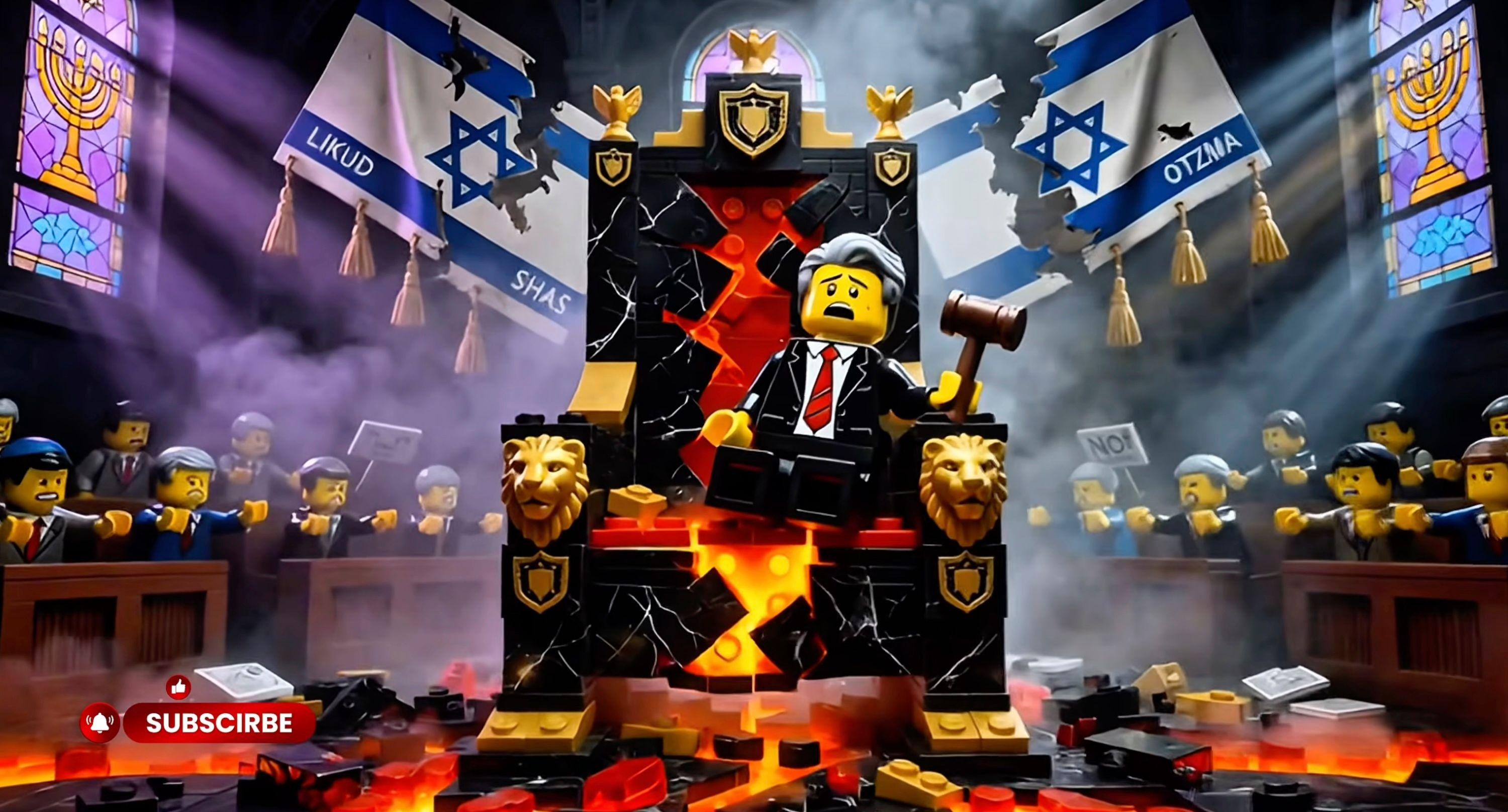
There is, of course, no doubt that these videos are deeply critical of Israeli and American warmongering—as are, in fact, the vast majority of people around the globe, most notably in the United States. But if we were to join the august chorus of the BBC, The New York Times, and The New Yorker in dismissing these videos as mere propaganda, then obvious questions would arise: Where should we, the vulnerable audience, go for truth—where are we to seek a corrective to the “highly sophisticated” distortions of the LEGOs? Are we to believe that the BBC and The New York Times are free of ideology? How about The Wall Street Journal? Fox News? Jeff Bezos’s Washington Post? Or perhaps we should turn to Hollywood? Are the studios purveyors of truth? Or does the truth lie with CBS News, bought by father and son billionaire Zionist Trump supporters Larry and David Ellison, and handed over to the self-declared “Zionist fanatic” Bari Weiss to rule? For a recent episode of 60 Minutes, Weiss not only gave a pliant platform to Netanyahu, allowing him to choose his own interviewer, but also had the piece heavily edited so the Israeli prime minister would appear less critical of the many Americans who oppose the war.
What sort of truth is to be found in such an infomercial for a war criminal? Is that the measure of truth against which these little videos are deemed propaganda? Is the BBC, that pestiferous source of distortions against Arabs, Muslims, Iranians, and Palestinians, an impartial judge of what is propaganda? The filmmakers behind the documentary Gaza: Doctors Under Attack (2025), about the Israeli army’s sadistic murder of medical personnel, just blasted the BBC for censoring their film. The broadcaster’s instrumental role in the 1953 military coup against Iran’s democratically elected prime minister Mohammad Mosaddegh is well-documented and violently reverberates to this day. Is there a mirror somewhere in BBC headquarters in London that they might face before accusing others of waging propaganda?
As a New Yorker, I read The New York Times almost ritually, every day. I do so not as a responsible citizen seeking to remain well-informed about the country and the world in which I live, but more like an anthropologist from another planet hoping to understand the bizarre behaviors of a strange tribe gathered in a 52-story skyscraper at 620 Eighth Avenue, near Times Square in Midtown Manhattan. To be sure, there are extremely attractive alternative anthropological sites, like Weiss’s CBS News, but I choose the Times. And nearly everything the corporate media says about Iran or Palestine or Venezuela, or indeed about the United States, can be read for its ideological intent. Meanwhile, these billion-dollar conglomerates appear institutionally threatened by the wild terrain of social media, where any person with a comfortable command over readily available AI technology can put together a mischievous little LEGO video and wreak havoc on the business of manufacturing consent for Israeli and American warmongering. I find these little LEGO videos far more pleasant to consume, even with a grain of salt, than the vicious columns of Bret Stephens and Thomas L. Friedman.
The question, however, is not about the merits of any one media entity, whether The Washington Post or CNN, but rather the whole landscape identified by Theodor Adorno and Max Horkheimer soon after they’d escaped Nazi Germany and come to California, in their classic study “The Culture Industry: Enlightenment as Mass Deception” (1944). At the heart of mass media, as they saw it, was a commodification of feeling and thought crystallized and animated in films and fictions, radio shows and glossy magazines, which collectively serve to subdue consumers into lethargic acceptance of their doomed fate. These LEGO videos turn the logic of the culture industry against itself, and it is within that context that we should understand why the Iranian clips rub corporate media the wrong way. It is not so much their content as their presumed port of origin, the dreaded and vilified Islamic Republic, that bothers the custodians of American mass media. Taking advantage of the openness of the internet, these videos have stormed the landscape, garnering millions of viewers, bringing Iranian and American audiences to common cause with the rest of the world. The New York Times and the BBC cannot control the phenomenon, so they seek to demonize it.
The New Yorker depicted the ethos of the videos as “a crude solidarity with victims of U.S. aggression, past and present,” concluding portentously that “the subject matter is deathly serious—international war, unfolding in real time, killing thousands—yet the visual vocabulary is preposterously trivializing.” Really? This is pop culture, and what’s more, it is satirical, playful, and irreverent. Not only does it fit perfectly well with the content flowing from the official White House social media accounts—featuring Trump as the Mandalorian, the Pope, or even Jesus Christ, while depicting former president Barack Obama and his wife Michelle as monkeys—but it is also utterly in keeping with countless canonical parodies (think Dr. Strangelove) in which “deathly serious” subjects are treated flippantly.
As we say in Persian, prick yourself with a needle before you stab others with a dagger. The thick wall these aging commentators assume between their “Iran” and their “America” has crumbled in the democratically open and chaotic landscape of cyberspace. The makers of these videos, in Iran, the United States, or anywhere else, know more about you than you know about them. As James Baldwin wrote,
You give me this advantage: that whereas you have never had to look at me, because you’ve sealed me away along with sin and hell and death and all the other things you didn’t want to look at, including love, my life was in your hands, and I had to look at you. I know more about you, therefore, than you know about me. I’ve had to spend my life, after all—and all the other Negroes in the country have had to spend their lives—outwitting and watching white people. I had to know what you were doing before you did it.
These videos are, in fact, far more anti-imperialist than they are pro- anything—including pro-Iranian. To see that, you need to know something of their literary and cinematic genealogy, something that has been completely absent from discussions in the mainstream media. The creators of these videos are both Iranian and American: Explosive Media in Iran and a young Iranian American working in the United States have claimed credit for them. But the deeper roots, nourishing this crop of internet-savvy content creators, go back to the rise of a new body of Persian children’s stories in the 19th century, with Abdul’Rahim Talibov’s (ca. 1834–1911) iconic Ketāb-e Ahmad (“The Book of Ahmad,” 1893) being one of the earliest signposts. Ketāb-e Ahmad (which Talibov claimed was inspired by Jean-Jacques Rousseau’s 1762 treatise Emile, or On Education) consists of 22 dialogues between the author and his imaginary son, Ahmad. Today it reads, in part, like an encyclopedia of recent sciences and discoveries; the very idea of a modern education outside the confinement of clerical learning, written in a simplified Persian prose that deliberately targeted young readers, was revolutionary in its time.
That political thrust in Iranian children’s literature continued apace well into the 20th century, as a robust elementary and advanced pedagogy was being officially cultivated for formal public education. The figure of Samad Behrangi (1939–68) looms prominently in this history. He was a rural teacher, social critic, folklorist, and short story writer from Tabriz. He and a collaborator soon began collecting children’s folktales in their province. In 1965, he published a seminal critical essay, often translated as “Investigations into the Educational Problems of Iran,” in which he severely criticized the dominant pedagogy that was astoundingly indifferent to the crucial issues of class and ethnicity in Iranian national culture. The book brought Behrangi to the attention of the leading public intellectuals of his time in Tehran. Soon his own short stories for children began to appear.
If you want to see what these creators of the LEGO videos are doing, you need to read Behrangi’s masterpiece, Mâhī-ye Sīyāh-e Kūchūlū (The Little Black Fish), published in 1968, just before his death by drowning. The Little Black Fish is an allegorical tale of a smart little fish who is not happy where it is and wishes to leave its little brook, explore the wider world, and find its way into the deeper ocean. Other fish frighten and discourage it, warning it against a dreadful pelican, but the little fish persists. Its story soon became an allegory of defiance and struggle against all odds for a generation of children. The symbolic character of Behrangi’s story is not entirely unprecedented, and we might trace it back to similar allegories by the Persian philosopher Shihab al-Din Yahya ibn Habash Suhrawardi (1154–91) in the 12th century—particularly his glorious short treatise Fi Halat al-Tufulliyah, or “On the State of Childhood.”
A related development worth considering by the parents of today’s young cohort of LEGO fans is a genre of modern Persian poetry in which folkloric diction and nursery rhymes were adapted for boldly political purposes. Perhaps the most significant of these poets was the beloved and celebrated Ahmad Shamlou (1925–2000), whose two major narrative poems, “Paria” (“Fairies”) and “Dokhtara-ye Naneh Darya” (“Daughters of Mother Sea”), adapted children’s songs and folktales to comment on current events. The result is an uncanny poetic diction in which one hears traditional rhyming and youthful joy in powerful denunciations of tyranny.
Of equal significance was Kānun-e Parvareš-e Kudakān Fekri-e va Nojavānān (the Institute for the Intellectual Development of Children and Young Adults), one of the most ambitious cultural institutions of the 1960s and ’70s in Iran, devoted to wide-ranging educational programs for children. Established in 1965 by the former Iranian queen Farah Pahlavi and a few of her closest friends and confidants, it produced children’s books, audiotapes, LPs, and, most significantly, children’s films. Some of the luminaries of Iranian cinema, including Abbas Kiarostami, Bahram Beyzai, Sohrab Shahid-Saless, Nasser Taghavi, and Amir Naderi, began their careers working under the auspices of this institution. The sole requirement for these filmmakers’ projects was to feature children as protagonists.
Consider the seemingly paradoxical fact that one of the most radically anti-government feature films produced during the late Pahlavi period, Naderi’s Harmonica (1974), was a product of this center for pedagogical materials. In Harmonica, we follow the adventures of a boy who possesses a harmonica, an instrument from abroad, with which he torments his friends, exploiting them for the opportunity to play on it for a few seconds. The boy’s haircut resembles a little crown—an allusion to the Shah—while the harmonica stands in for the oil revenue flowing into Iran during the Arab oil embargo of 1973, in which the Iranian monarch refused to participate. There were reports of anti-government protests after the first screening of the film.
By now, the LEGO videos have gone completely viral; they have become a global phenomenon. Their origins most certainly are Iranian, but they no longer remain limited to that source. Anyone with access to a laptop, a clear political and ethical sensibility, and a creative command of AI can produce one of these videos and have them hit the internet. They are no longer a unique event but a burgeoning genre. A Spartacus rises from the seas around the Strait of Hormuz, and a chorus of slaves stands up and says: “I am Spartacus!” Years ago, a Latin American filmmaker told me he wanted to make exactly the same films as Kiarostami but to set them in the Caribbean. These videos, too, have escaped their authorship. Soon after Goethe composed his West-östlicher Diwan (West-Eastern Divan, 1819) in honor of the Persian poet Hafez, countless German poets started calling themselves Hafez. That was, perhaps, the originary moment of these viral Iranian LEGOs.
¤
All photos courtesy Explosive Media.
LARB Contributor
Hamid Dabashi is Hagop Kevorkian Professor of Iranian Studies and Comparative Literature at Columbia University in New York. His most recent books are The Subversive Seventies in Tehran: Romancing Revolutions (2025) and Imagine a Nation: Six Persian Poets in Search of a Homeland (2025).
LARB Staff Recommendations
The Shattered Mirrors of Golestan Palace
The destruction of Iranian cultural heritage sites, and the cultural histories buried in the rubble.
Different, Deadly Games
With the American-Israeli assault on Iran, the die is cast.