The Body and Other Sites of Resistance
Sarah Wang discusses her new novel about reality television, plastic surgery, and mother-daughter dynamics.
By Amy Y.Q. LinMay 14, 2026
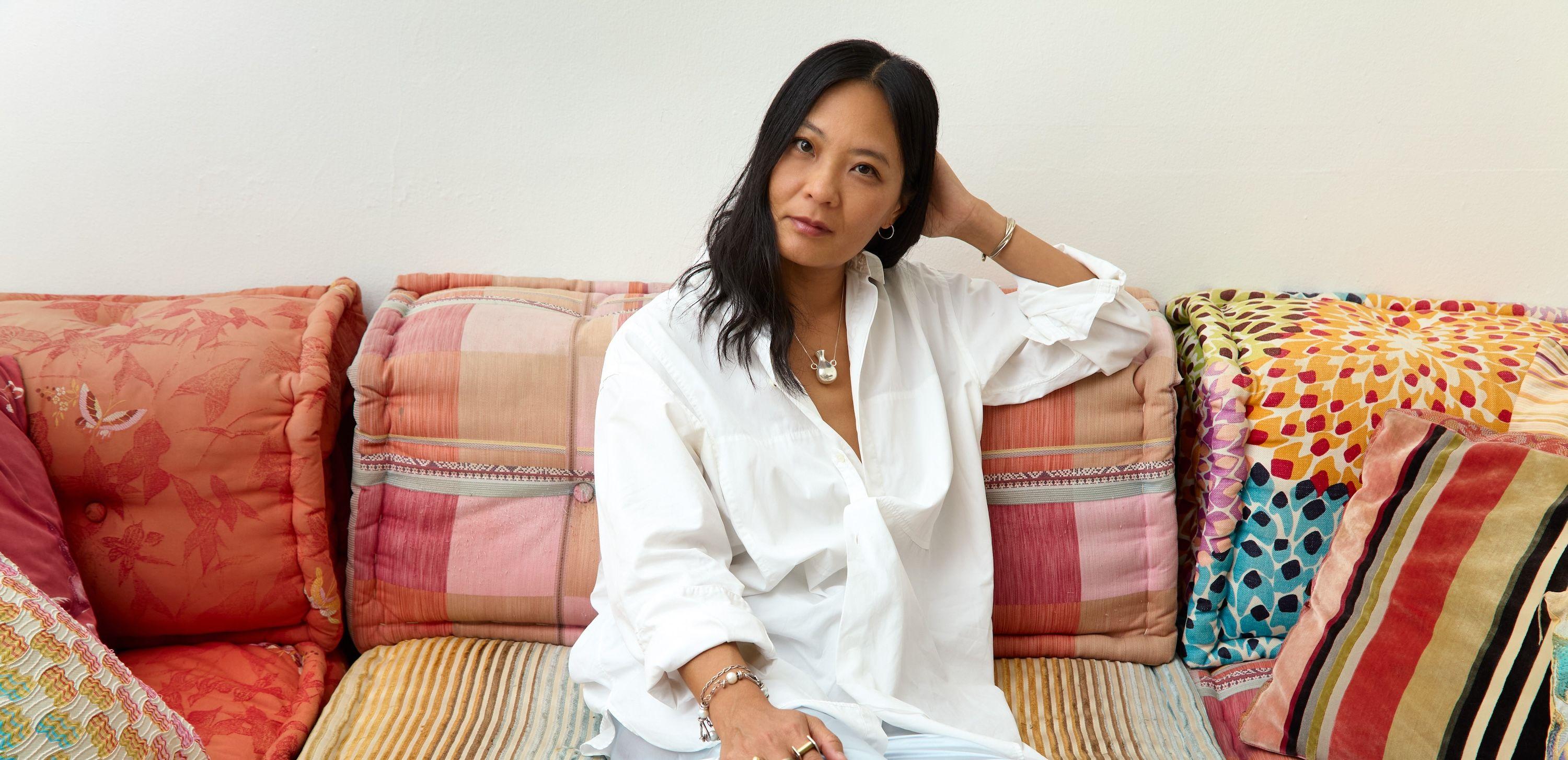
New Skin by Sarah Wang. Little, Brown and Company, 2026. 320 pages.
Did you know LARB is a reader-supported nonprofit?
LARB publishes daily without a paywall as part of our mission to make rigorous, incisive, and engaging writing on every aspect of literature, culture, and the arts freely accessible to the public. Help us continue this work with your tax-deductible donation today!
SARAH WANG’S DEBUT novel New Skin (2026) follows Linli, the daughter of a plastic surgery addict, whose life is lived in lockstep with her mother’s latest medical catastrophes. Set in Los Angeles, the book traces an exciting yet disastrous period in their lives, when Fanny, Linli’s mother, joins the cast of a reality TV competition in which botched contestants compete for a complete reconstructive makeover. Though she no longer recognizes her mother’s new face, Linli fights, at the cost of her own sanity, to save Fanny from self-destruction. A source of both hilarity and heartbreak, Linli and Fanny’s mother-daughter dynamic propels the novel’s core concerns about identity and belonging. This page-turner features gritty and intelligent analyses of immigration, Americanism, and deadly beauty standards.
I met Sarah in 2021 in a small workshop of Asian American writers. Her work over the years has intersected meaningfully with the dark twists of today’s culture and values, spanning the “lying flat” counterculture movement, precrime surveillance art, and mass shootings. In mid-April, we talked over Zoom about her interest in class issues, her Angeleno upbringing in a predominantly Chinese neighborhood, and opportunities for repair in families and communities that have perpetuated harm.
¤
AMY Y.Q. LIN: New Skin shines a forgiving light on plastic surgery, humanizing the class issues that motivate people on both sides of illegal back-alley basement procedures. How did you become interested in telling their stories?
SARAH WANG: I always start from a place of lived experience and personal interest in the things that trouble me in life, the world, society. Those always begin with growing up in an immigrant family and thinking about issues related to women, single mothers, and poverty. These concerns can live anywhere in the world of fiction. Somehow I used plastic surgery and cosmetic procedures as the room that all these issues take place in. They’re issues that I write about in all of my work.
I admired how your book pairs scholarly ideas like restorative justice with superficial obsessions. You suggest that beauty can be a kind of resistance, especially when marginalized people are otherwise powerless in this country. They can express their ideas through their faces. Where did this thesis come from?
When you’re talking about people who are marginalized, poor, women—who have little agency—I never want to come from a place of condemning the choices they have to make in order to survive. On a human level, everyone does things that aren’t good for them. Understanding why people make the choices they make is more interesting to me than any kind of value judgment. Although, of course, if you enact violence upon another person, there’s a clear line there. But these people are doing things mostly in terms of getting botched plastic surgery and physically harming themselves. Not necessarily even harming, always, but using their body as a site of resistance, as you say, and manipulation.
Because I begin with Fanny as having this preoccupation with her own body, I was thinking of it as any other kind of addiction that deals with the body—like substance abuse, cutting, and eating. There’s no outside eye that can understand why someone does something with their own life. Often, we don’t even understand why we make the choices we do. She has her own reasons. It’s for no one else to judge. If she feels safer and better inside of one body, then that’s absolutely her autonomy.
I really wanted my characters to be able to do whatever they want with their own bodies, even if it’s not always the best choice, or if it gets them into financial trouble. People always want what everyone has and what’s being advertised to them. Undocumented immigrants and impoverished people wanting plastic surgery is just as valid. Everybody wants it now. It’s not uncommon to keep up with the Joneses. That is our beauty industry now.
I have read several of your essays, and you write grimly on many serious topics. Yet this novel is truly funny, gory, and bizarre. What was the process of figuring out how to balance your seriousness with the entertainment biz of writing compelling fiction?
I realized that I have a lot of strong political ideas about incarceration, women’s labor, marginalized people, class, and poverty. In previous versions of the book—of which there have been many—I tried to lead with the ideas. But that didn’t really work, and I had to write many drafts and work with my two editors. What I realize now is that I had to lead with story. Everything else would just follow. If it wasn’t working, it was always because the story wasn’t right in the timing or the stakes or the pacing. Once I realized this, everything came together. The lesson I take away is that the politics and concern and heartache will all come through because it’s you—your writing, your ideas, and your language.
There are many achingly beautiful descriptions of Los Angeles (of bougainvillea, the surf “like a tender lip eating night,” “the clarity of the California sun”) as well as irreverent memories from childhood (late karaoke nights and Fanny standing on the Mendocino cliffs in a polka-dot bikini). Then there’s Linli’s general loathing at being “back in LA’s satanic clutches” and her desire to leave again. How has your Angeleno upbringing and identity influenced your writing?
Home is a nesting doll of relations, architecture, geographies, the family unit, the house you grew up in, the town, city, state. This is rife with love, longing, frustration, hatred, and difficulty to varying degrees for people who have different backgrounds, upbringings, and familial units. California for me is just home. It’s inarticulable what home means. Going back to Los Angeles, every time I get out of the airport and I’m in a car and I’m speeding down the highway, and I’m looking at the particular way that the air filters the light, the plants, and all the cars on the freeway, and then driving closer to where I grew up, where my friends are, and where my mom is—there’s just this feeling of belonging that I can only ever have in that very particular landscape.
I had a difficult adolescence and childhood in many ways. So all of that feeling of belonging is also couched in a different kind of belonging, which is the life I’ve lived there and everything that encapsulates. Writing all of that in fiction or nonfiction is incredibly meaningful. To try to convey my experience of home, of being so familiar to my native experience in this world, is something special. Writing about Los Angeles always puts me back there in a way that’s embodied and visceral. My friends and family in L.A. know me in a way that I’ll never be known by anyone else.
Also, there’s a depth of understanding inside of me of a place and people that I’ll never have anywhere else I go. In Los Angeles, so many places I frequent feel predominantly Chinese. There are restaurants I go into where the menus are only written in Chinese, and I have to ask my mother what this is or what that is. A lot of people only speak Chinese. So on top of that feeling of being native in Los Angeles, it extends to ethnicity and culture. I feel belonging in a way there with all kinds of immigrants. I feel a sense of place there that I don’t feel anywhere else. It’s not only special but also affirming.
Did you always know you wanted to write a book about Chinese immigrants?
When I was a very young writer just starting grad school, I thought I wanted to write a cool book about drugs and delinquency. But in the process of trying to write in school, you experiment. Some things fall by the wayside, and some things emerge as fertile territory for writing more about, exploring, or deepening your thought. I didn’t always think I was going to write this kind of novel. I perhaps was even averse to it in some way because it’s a very personal place—it’s my own upbringing with a single mother. I’m a second-generation immigrant. The decision and the direction to keep going with this kind of writing was difficult and fraught. What do I have to say about it? How can I say it in my own way? It happened over time, organically, through drafts. I would even say that this book became more Chinese the more I wrote it. I’m happy with that.
Times have also changed though, and that’s helped. With technology and streaming, K-pop, K-beauty, Japanese reality shows, Asianness, and Chinamaxxing are so much more a part of the conversation now. It’s been an evolution over the time that I started writing until now. It helped that the culture made me feel encouraged by the stories and movies I was seeing. Even since the pandemic, how it was hard and stressful and scary for a lot of Asians—that experience shaped my investment in telling an immigrant story as well and made it all the more meaningful.
The book’s themes do not seem overtly prescribed. Rather, they feel true to the characters, as if they emerged and came into your book because the characters necessitated them.
Maybe that’s why it took me so long. The book evolved to incorporate my interests and ideas through the story of this mother and daughter.
Fanny and Linli’s relationship is rocky from start to finish. Your book talks about their cycle of sacrifice and pain, showing us near-constant whiplash from trauma to affection. There’s a part where Linli’s boss DB shares a plant metaphor to talk about self-similar traits that replicate trauma across generations, and Linli also leads a group through reading about how people subjected to violence perpetuate it. How were you thinking about the way trauma is perpetuated between parents and children?
With addiction, which is Fanny’s affliction, you hear about people whose parents were alcoholics and then this place of origin being a major formative trauma for people having to live with and witness parents who behave in this way and destroy their own lives and their children’s lives. It’s not necessarily uncommon for the next generation to repeat the mistakes and failures of the previous one. I think this is one of the great paradoxes in life: why would we do exactly what we hate the most, which is what our parents did to us or to themselves?
Our relationships with our parents and the people who raised us are very complicated. In one way, we can’t help but consider them role models, even if the choices that they made were harmful. Linli’s greatest source of sadness and anger in life has been the ruination that Fanny has brought upon them financially, in terms of her preoccupation with and insistence on getting all these surgical procedures. Wouldn’t this be something that Linli would avoid at all costs? However, she goes and makes the same uncanny mistakes.
When you are poor, desperate, in a place where you feel like your back is against the wall, you will do things that maybe you normally don’t do. Linli gets lucky earlobe injections partly because she’s desperate, but also because it might be unconsciously familiar to her in a way that nothing else is.
You’ve also made the characters diametrically opposed because Fanny has such an optimism and energy that constantly astounds Linli. Fanny only wants “what tomorrow could bring,” whereas Linli is always pining “for an irretrievable past.” How were you thinking about these opposing mindsets?
In a lot of ways, I was thinking about how a first-generation immigrant thinks—their subjectivity, how they’re structured by their experience, and this sense of displacement that they’re never without—and how it’s different for the second generation. Fanny is delusional in some ways. People who are writers or rock stars or actors, who choose to do things with few guarantees and a lot of risk, especially people who don’t have the cushion of money or family, have to be almost delusional and have this grandiose belief in I’m going to make it, or I’m not going to fail, because there are so few people who succeed in creative fields and the fine arts. Fanny has a similar grandiose belief in herself and the future that maybe has to do with narcissism.
I’m working with a lot of diametric oppositions in this book—humor and darkness, violence and the absurd—even within the characters. For Fanny, everything works out somehow, impossibly. In some ways, Fanny has gotten none of what an immigrant may have hoped for in coming to this country. There are no fortunes for her. But in another way, she gets a lot of what she wants. She does get Linli to stay in Los Angeles, and she gets on TV.
Looking forward versus being obsessed with an irretrievable past is my experience of being a second-generation immigrant. I like to collect vintage things, and when I would go shopping at thrift stores, my mother would be horrified and be like, “Those clothes belong to dead people. Why do you want that? It’s disgusting. It’s horrid.” Immigrants may want new things because new things seem better—it’s totally conditioned by society, culture, and the way that we were brought up. Linli and Fanny reflect these desires and goals.
Throughout the book, Linli is mired in this question of her life, her work, and when she meets other immigrants in the beauty industry: what are the opportunities for repair in times like these, where people perpetuate harm toward each other?
I’m a big believer in molecular revolution, where repair can happen on different levels, often at the levels of interpersonal dynamics and community. In my life and in the lives of the characters, these actions are attainable in some way, although I don’t think they are going into it thinking, I am going to participate in these intentional acts of repair. But they’re doing it, whether or not they know. That is something that I absolutely wanted for Fanny and Linli.
For Fanny, the reason I have her going on this show is that I wanted her to find community with people who are like her. When I go back to these very Chinese parts of Los Angeles, I don’t have to explain myself. I can just be, and there’s a relief in that. Belonging in different intellectual, artistic, or literary communities in New York, there is work that I may be doing unconsciously to perform, even if it feels natural as part of my own identity. But these aren’t communities that I grew up having. I still feel a little bit out of place when I’m at dinner parties with writers. I wanted Fanny to be among other victims of botched surgeries.
The people that Fanny’s aligned with on the show are people of color like herself, so there’s an extra understanding and community that she’s able to find, ironically, on a reality TV show. Yet it’s there for her. She says to Linli, “I found friends there and told them things that I’ve never told anyone.” Fanny is able to have this dialogue for the first time in her life with people she trusts. It’s heartbreaking for Linli because she’s like, “How could you tell strangers and never me?”
Belonging and understanding your place in this world goes beyond language. It also has to do with history and meaning. Linli is just beginning to understand where Fanny comes from through interactions with the community of undocumented, female workers in cottage industries, like boba shops, massage parlors, and illicit med spas. There’s this passage about these young women longing for home and what they’re excited about.
I loved that passage. I hearted it in the margin. It was special.
Linli is able to imagine for the first time what it was like for her mom back then. There are all the horrible things that Fanny has told her, but there is also the excitement for a new world, experience, and community that these women have—that Linli is only able to ascertain through her interactions with these people, seeing how they live and what they talk about. This idea of repair is also embedded in that experience. Now Linli can pay it forward by understanding that there are things she’ll never know about her mom’s identity and story. If we love people, and we want to think about how to move forward in relationships that have possibly involved harm and pain, we can allow them the grace to be their own person, to make their own mistakes, for us not to fully understand and still be okay. That’s easier said than done because when it’s our parents, we don’t have that detachment. But part of being an adult and your parents aging is starting to understand that not knowing is a part of life and a person’s journey in this world, especially in a new country.
You have to let go of possession. Linli and Fanny have been each other’s one person for such a long time. I was tracking that in the book, that idea of the only person I have is you, and how that emerges as a problem and also something they cling to. Then it was just wonderful toward the end to see them let go of I have to understand you fully and realize It’s perhaps just enough to be able to spend time with you, for you to allow me to be part of your life.
It’s hard when you put everything on another person—like your happiness or past—or hold them responsible for what they did or didn’t do for you. I know people who aren’t close to their parents, who don’t see them much or at all. They don’t even go home every year for holidays. While it was difficult for me, I also acknowledge how special it is to have that closeness and understanding with family. I remember once I took a picture on a vacation where I was stung by a lot of mosquitoes. I zoomed in on a cluster of all these mosquito bites and showed my mother like, “Oh my god, look at this photo.” I didn’t say it was me. She looked at this part of my body that had no identifying features and said, “Oh, that’s you.” I said, “How do you know that was me and not my friend that I was traveling with?” And she’s like, “I recognize a part of your body when I see it.” That was crazy to me.
Oh, that’s really tender. It makes me think of my dad. We have been estranged in parts of my life, and I went to live with him last year for the first time as an adult. That was kind of a risk and a weird thing. The first thing he said to me was when—I stepped off the subway, and we went to a bar to eat because it was late—he put his hand on my head and was like, “You’ve always had this head shape. I remember when you were a baby and your head was shaped like this.” It was such a soothing thing to hear. You wouldn’t get that with anyone else or unless you talk to your parents. There’s a lot that they withhold.
That experience is a kind of knowing that probably your partner doesn’t even have because it has to do with how you were when you were born. That bodily knowing—it’s so special.
¤
Sarah Wang has written for The New Yorker, The Atlantic, the London Review of Books, The Nation, The New Republic, Harper’s Bazaar, n+1, and BOMB, among other publications. Wang is a 2023 NYSCA/NYFA fellow, a 2023 MacDowell fellow, a 2020 Center for Fiction/Susan Kamil Emerging Writer fellow, and the winner of a Barbara Deming award and a Nelson Algren prize for fiction. She teaches writing at Barnard College and lives in New York City.
LARB Contributor
Amy Y.Q. Lin is a writer and pianist. Her writing is published in Catapult, The Rumpus, Los Angeles Review of Books, The Creative Independent, One Story, and elsewhere.
LARB Staff Recommendations
Ways of Seeing Korean Plastic Surgery
Four Women’s Voices Reshaping Asian and Asian-American Immigrant Stories
Michael Adam Carroll champions the defiant voices of four contemporary Asian-American women novelists who are reshaping the tales of immigrant communities.