John Waters Is ‘Officially Good’
The legendary director talks about his films’ induction into the Criterion Collection, comedy as our best weapon against fascism, and ‘going on 81.’
By Conor WilliamsJuly 11, 2026

Did you know LARB is a reader-supported nonprofit?
LARB publishes daily without a paywall as part of our mission to make rigorous, incisive, and engaging writing on every aspect of literature, culture, and the arts freely accessible to the public. Help us continue this work with your tax-deductible donation today!
AT AGE 80, John Waters, one of the true progenitors of American underground film, is bearing the fruits of his filth. Recent years have seen the mass publication of his screenplays, including Pink Flamingos (1972) and Female Trouble (1974.) Those films, as well as Multiple Maniacs (1970) and Polyester (1981) have entered the Criterion Collection, soon to be joined by Desperate Living (1977) and his most mainstream work, Hairspray (1988). In anticipation and celebration of these new restorations, I caught up with the auteur over the phone.
This interview has been lightly edited for clarity.
¤
CONOR WILLIAMS: I programmed a film series at BAM last year called First as Tragedy, Then as Farce: Anti-Fascist Comedies. On the closing night we showed a 35 mm print of Desperate Living to a sold-out crowd, and people were roaring.
JOHN WATERS: That’s great. One of my favorite films is The Battle of Algiers, and I certainly could never approach that, but this was my Battle of Algiers.
I feel like it’s one of your more underrated films.
People hated it when it came out, and then it was scarily not politically correct for a while, and now young trans kids roar at it. The movie has gone through many different phases of public reaction. I’m so pleased with Criterion, because that gives it—that’s like getting a plenary indulgence from the Pope. You can’t do anything wrong again. That’s what Criterion is like. It’s now officially good.

Still from Desperate Living (1977). Courtesy of the Criterion Collection.
When it came out, it was one of the first films you made without Divine. Were you worried about that?
I was worried about that. I was worried about the subject matter. I remember that audiences just didn’t know what to do about it. The trans thing was just not something that was talked about, much less in a comedy, and much less having someone conflicted about transitioning. And having ludicrous sex scenes, and still at the same time being about politics, about fascism, and living in a town under the rule of the terrible Queen Carlotta. I tried to make her kind of like a Disney villain, and the castle was very much like Disney, although the whole town was made out of garbage. Vincent Peranio’s sets—I think this is one of the best films he did with me. In the new restoration, you can see detail—I saw stuff I never noticed. I love that it’s in 4K. That’s like a joke, almost. [Laughs.]
Comedian Marc Maron was in the Criterion Closet and he described your films as being “one of the only weapons against fascism that we have.” What do you make of a statement like that? Do you agree?
Oh, that was very nice. That was very nice. I agree! The problem with Trump is that you can’t embarrass him. You could embarrass Bush. You could embarrass Reagan, even. But you can’t embarrass Trump and you’ve got to figure out a way to do that. That’s why I had a sign that said Trump ended bad taste. You have to use humor; it is the only way to fight. It is terrorism, good humor. Why didn’t drag queens dress as Melania and go to the Melania documentary and shout out? That would’ve been brilliant, and it would have really pissed him off.
Talk about pure propaganda.
I know, but that’s alright! So what! He got away with it. He’s the only president we’ve ever had, like Edith [Massey, as Queen Carlotta] in the movie, that likes that we hate them.
You mentioned the trans aspect of Desperate Living. It’s pretty remarkable. Why was it important for you to feature a trans character?
Elizabeth Coffey was my friend, and she was one of the first people [to transition] at Hopkins Hospital, which was one of the first hospitals that ever did it. They no longer do it. But at the time they were quite radical, and Dr. [John] Money, that was his name, was my friend, and Elizabeth was in Pink Flamingos. She said she did the scene where she flashes her tits and her dick because she owned the joke. She came and cut the ribbon at the Baltimore Museum [of Art] when they opened the bathrooms named after me.
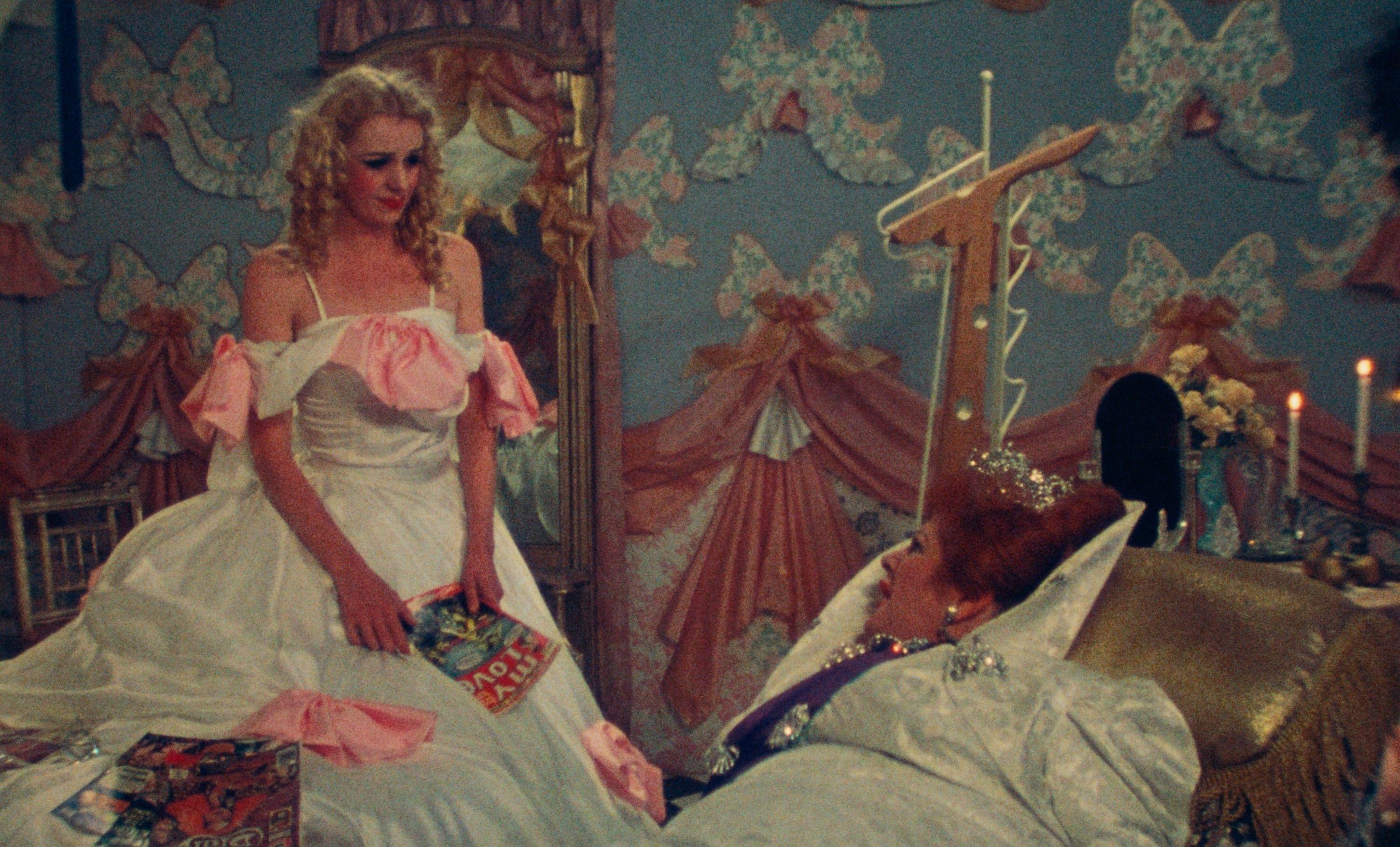
Still from Desperate Living (1977). Courtesy of the Criterion Collection.
I always remember, from the fifties, what’s her name … the GI who goes abroad and …
Christine Jorgensen?
Yes! We asked her to be in Polyester and she couldn’t.
Wow. You said the trans community was kind of pissed about Desperate Living?
I think the lesbian community was, at first. Like, how dare a man make a movie about lesbians. Then the trans community, they just didn’t seem to know how to take it. Now the trans community embraces it with irony. Because what’s wrong about it? When she says “I want a wang, and I want it now,” that’s militant! But to ask your partner if that’s something that they want, that’s something even today that’s touchy to talk about. I just wanted to make a movie—I was hanging around with all lesbians then, and I knew Elizabeth and I was sort of fascinated by her, and she had been in Female Trouble after she had gone through the change. Elizabeth had a sense of humor about it. I knew her, she was just a hippie girl. I guess it just all came together because this was all happening in Baltimore.
Turning to Hairspray, you’ve said that it was your most radical film because it was rated PG.
It snuck in! It’s put on in Florida in grade schools and nobody complains. How could that be? Even racists like it. They don’t know how to attack it because it’s so not mean-spirited.
Were you consciously attempting to make a film more appropriate for general audiences, or was that how the film just turned out?
Well, sort of. I knew it was going to cost two-point-something million. I got the money because they read it and knew it wasn’t going to be Desperate Living, which was a big failure. I didn’t sit down and think, I’m going to write this next one and it’s going to make a lot of money. You can’t plan for that to happen anyway. But certainly, New Line paid for the whole thing. It was a big budget for us, so I was aware that there was pressure to make a big commercial movie. But that’s okay, I expect that. I want it to make money too!

Still from Hairspray (1988). Courtesy of the Criterion Collection.
It’s such a joyful film, and that feels quite subversive as well.
I think all my films are—even Desperate Living is joyful at the end!
Well, it has a happy ending, yeah. [Laughs.]
I think that you can tell that we had joy making these movies, even at their ugliest. It was a group effort of everyone joining in this insanity to make.
I’ve heard you mention that beatnik culture was your first sort of cultural awakening.
Oh God, yes. I wore sandals laced up to my knees and went to beatnik coffee houses and wore dirty sweatshirts and Levi’s. I’m still a beatnik! I still wear turtlenecks every day.
Do you remember when you first read Ginsberg’s “Howl”?
Probably in high school? Beatniks had gay people, integrated couples, before anybody did. The fact that they didn’t care what other people thought about them—I read about them in Life magazine. I got corrupted by Life magazine because I would read about these beatniks and think, Where are they? This is my people! I’ve got to find them!
Do you remember meeting those guys?
[Ginsberg and I] didn’t have a great thing. I had to ask him if I could use “Howl” [in Hairspray] and he was offended—I think he thought we were making fun of him. I didn’t get along great with him, although I wasn’t against him, even though he was in NAMBLA. Burroughs I definitely got along with.
Bad reviews were good for you because they gave you a lot of notoriety and attention. But do you remember some of your first good reviews? Was there a turning point?
Sure, but the bad reviews are the ones you remember the most. Kevin Thomas at the L.A. Times was a big supporter. Vincent Canby didn’t like my movies, but he wrote think pieces about them that helped. Pauline Kael gave Divine the first good review. I miss the power of the critics. That Friday when your movie came out, it really mattered what the big critics said. Today there aren’t many critics, and they don’t have much power. A few of them do.
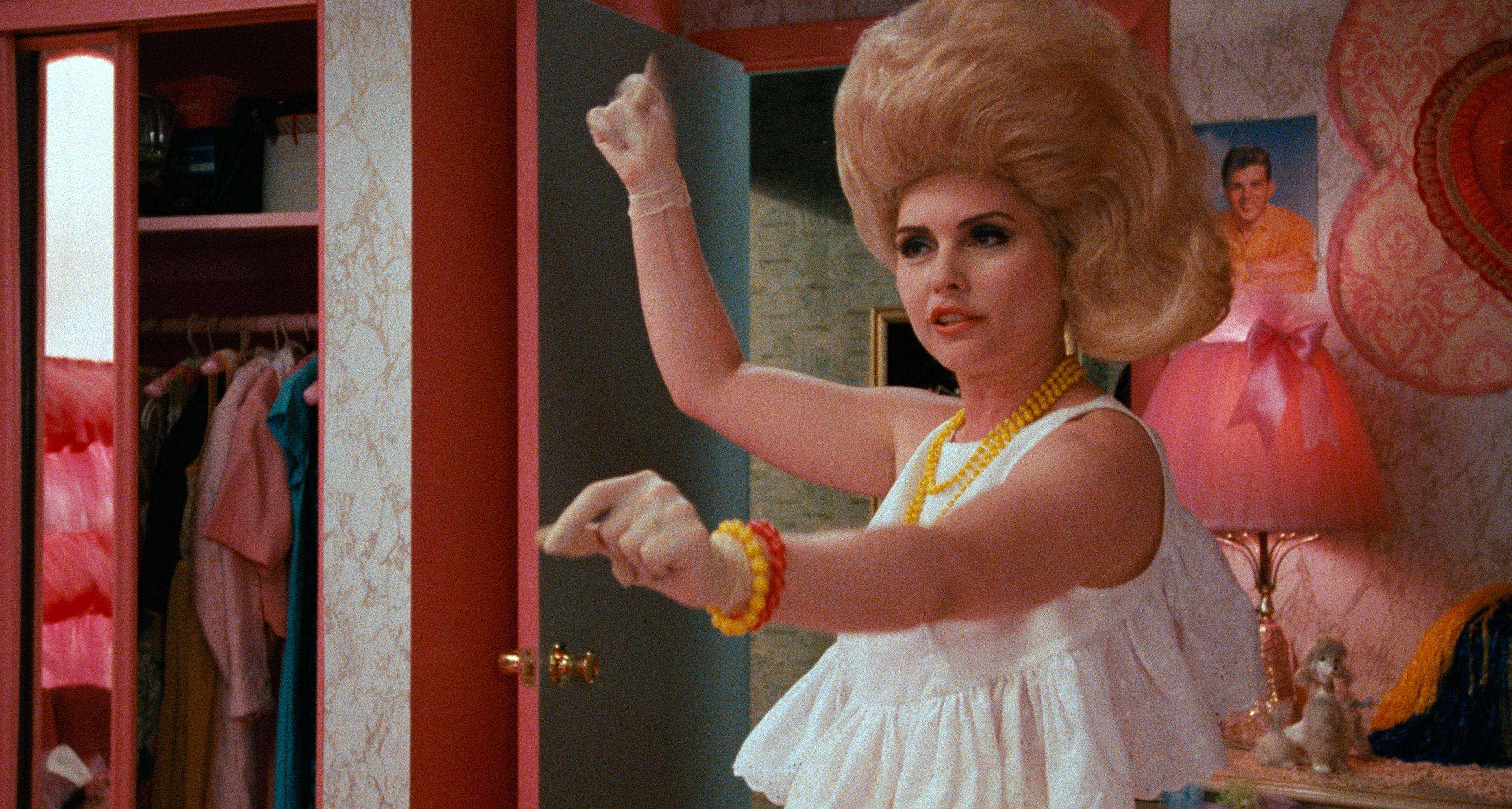
Still from Hairspray (1988). Courtesy of the Criterion Collection.
So much of the industry has changed.
But so what? Everything changes. You’ve got to keep up with it. These two kids that just made these giant hit movies? Good for them!
I’ve been thinking about you in relation to that, because—
No, it would be the opposite, because I always say that anything on the internet has not started a new craze for a movie. It hadn’t, up until two weeks ago.
Sure, but I’m talking about starting with such simple means.
It’s always hard to get a movie made of mine that costs a lot of money. Liarmouth was going to cost a lot of money. If you read the book, how could it ever be made cheaply? It’s a road movie, there’s special effects … so I’m not that surprised. The average Hollywood movie costs 60 million dollars to make.
You don’t think there’s any way you could go back to how—
No. I’m not interested in making an underground movie at 80.
Well, okay. I’m a little embarrassed to tell you, John, that my first exposure to you was in Adam Shankman’s Hairspray remake where you had a cameo as a flasher.
Yeah, they put me in right in the beginning just to prove that I approved.
What were your feelings at the time?
I was thrilled! I think they did a good job. They made it different. That’s why it worked. That’s why it was a big hit. They didn’t just do the same thing, like Rent and some of them did. I’m going to go see Adam Shankman’s new movie with RuPaul next week.
Would you ever sanction another remake of another of your films?
Sure, oh yeah! I wrote four sequels to Hairspray that never got made. I would have to write them, I think. But who knows! We’ve been approached for Serial Mom to become a television show, so yes!
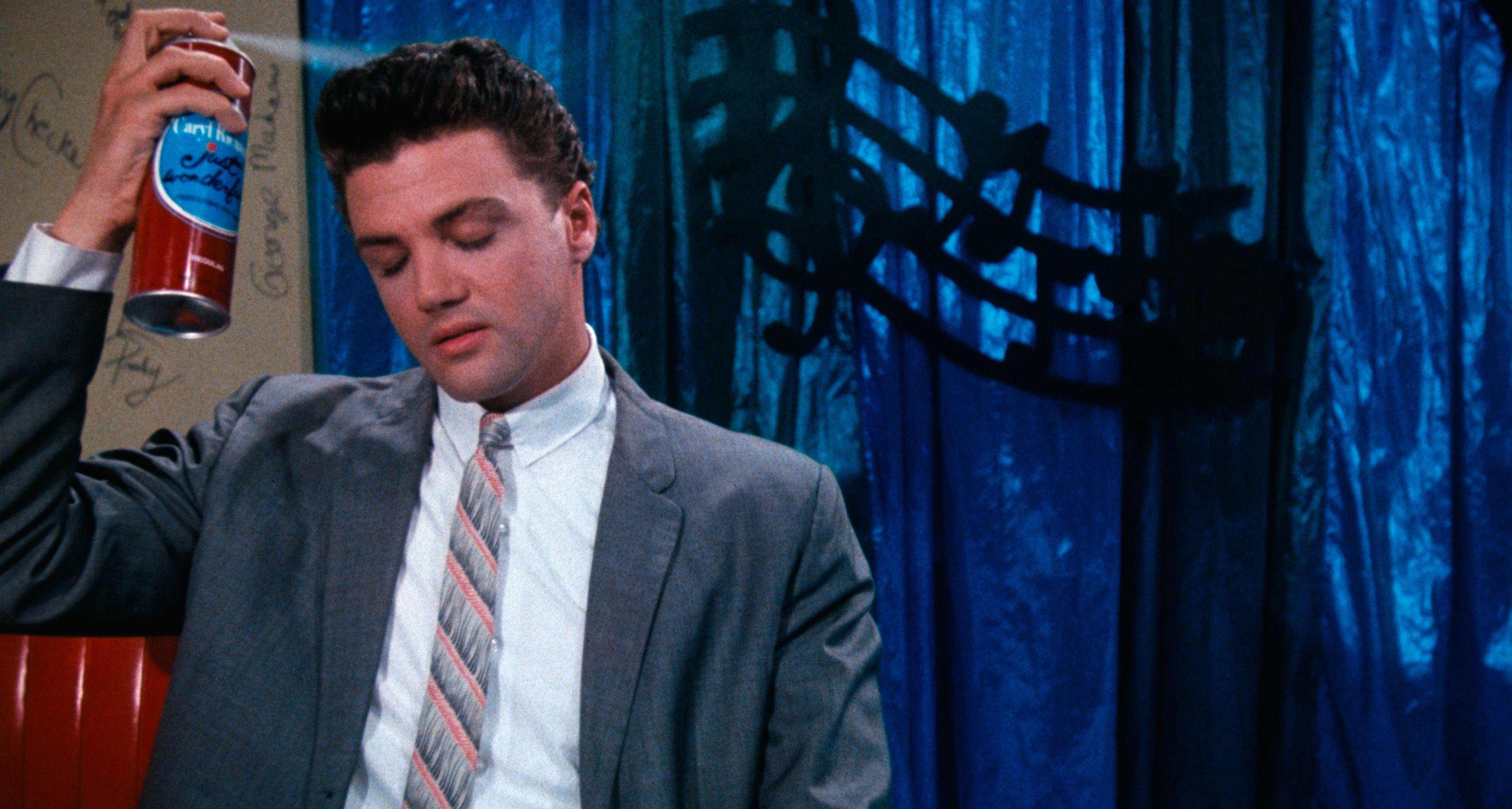
Still from Hairspray (1988). Courtesy of the Criterion Collection.
You recently turned 80 years old.
Now I can say to people who ask how old I am, “going on 81.” [Laughs.]
What was that party like?
I had a great party in New York, but I did eight birthday shows, so I didn’t have that many parties, and then I went to Europe to celebrate and get away from everything.
Good, I’m glad. I have one question left for you. You’ve done many things—written books, made art, made films—is there anything you haven’t yet gotten to do that you’d still like to take a crack at?
I just had my first poem published in The Atlantic, so I’ve done that. I have not written a play. I would like to. I have done music; I have two Grammy nominations for spoken word. The only thing I haven’t done is written a play, and maybe I will.
I’m looking forward to seeing it, John.
I still want a Maybelline ad, but they won’t give it to me.
¤
John Waters is a writer, a film director, an actor, and a visual artist best known for his films, including Hairspray (1988), Pink Flamingos (1972), and Serial Mom (1994). He is the author of the national bestsellers Role Models (2010), Carsick: John Waters Hitchhikes Across America (2014), and Mr. Know-It-All: The Tarnished Wisdom of a Filth Elder (2019). His spoken word shows This Filthy World, False Negative, and A John Waters Christmas continue to be performed around the world. He lives in Baltimore.
¤
Featured image: Still from Hairspray (1988). Courtesy of the Criterion Collection.
LARB Contributor
Conor Williams is a filmmaker and writer based in Brooklyn. He currently works at BAM Rose Cinemas.
LARB Staff Recommendations
John Waters on Filmmaking, Felonies, Fox News, and Fucking
Conor Williams gawks at “Liarmouth: A Feel-Bad Romance” by John Waters.
Pier Paolo the Anti-Fascist: On Criterion’s “Pasolini 101” Collection
Conor Williams reviews “Pasolini 101,” the new Criterion Collection box set on Italian director Pier Paolo Pasolini.