Sowing the Seeds of Apology
Roland Orzabal of Tears for Fears makes amends in his new ‘astrological memoir.’
By Dan FriedmanAugust 4, 2026
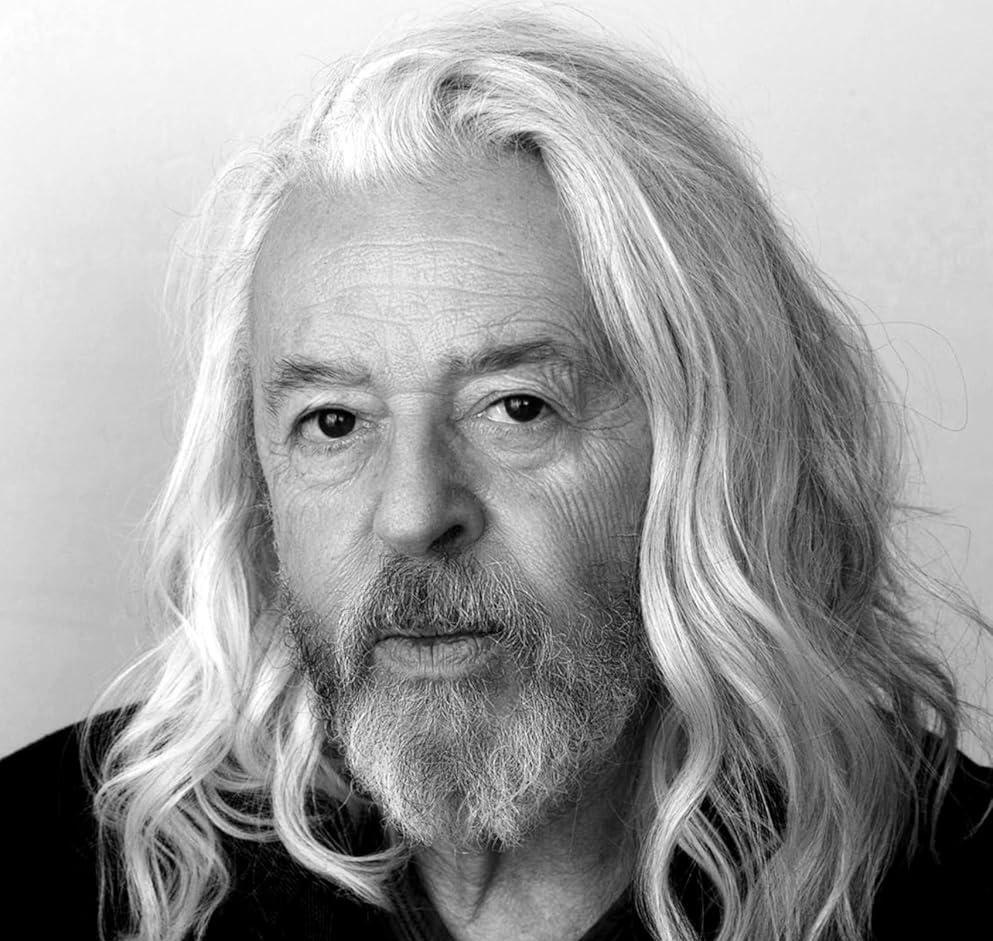
Welcome to Your Life: Love, Death, and Tears for Fears by Roland Orzabal. Dey Street Books, 2026. 304 pages.
Did you know LARB is a reader-supported nonprofit?
LARB publishes daily without a paywall as part of our mission to make rigorous, incisive, and engaging writing on every aspect of literature, culture, and the arts freely accessible to the public. Help us continue this work with your tax-deductible donation today!
ONE OF THE MAIN obstacles to making Bohemian Rhapsody (2018) into an Oscar-winning movie was convincing Brian May and the other rights holders to Queen’s music that the best years of Queen were not after Freddie Mercury died. A similar difficulty faces the editor of Roland Orzabal’s new autobiography Welcome to Your Life: Love, Death & Tears For Fears.
Orzabal—who, along with Curt Smith, led the rock duo Tears for Fears in the 1980s and ’90s—was last at the center of the pop culture conversation in the very early ’90s. Since the band split up in 1991, he has been only occasionally in the corner of the public eye, initially releasing his own music and playing solo concerts through the 1990s; after he and Smith reconciled in 2000 to record a new album (released in 2004) and spent the 2010s touring to support various singles and deluxe reissues, they finally had a hit comeback album with The Tipping Point in 2022. Most notably, though, Orzabal has appeared vicariously on the soundtrack of the 21st-century zeitgeist through surprisingly numerous iconic cover versions of early Tears for Fears songs that he wrote.
If you are a Gen Xer, you probably know the band from their anthemic “Shout” or the synth-pop shuffle meets highway rock of “Everybody Wants to Rule the World,” which were huge hits in the mid-1980s. In a tip of the hat to the past, the autobiography takes its name from the opening line of the latter song. If you are a millennial, you may know “Mad World” from Michael Andrews and Gary Jules’s haunting version in Donnie Darko (2001) or perhaps from Adam Lambert’s performance on American Idol in 2009. A bit later came Lorde’s arresting cover of “Everybody Wants to Rule the World” for The Hunger Games: Catching Fire (2013). And those were the ones people knew about. Most people didn’t even realize that, when Kanye West chose to write about his late mother in “Coldest Winter” for his 2008 album 808s & Heartbreak, he used so much of “Memories Fade” from Tears for Fears’ debut album The Hurting (1983) that Orzabal was credited as a songwriter.
On top of making the publication relevant to a contemporary audience, Orzabal and those who helped shape his book faced two other significant challenges. And he is frank about both. The first challenge is that he is a self-avowed fabulist who lives in his head and loves to tell stories. Exhibit A: his official fictions. I was one of the few writers to acknowledge his novel Sex, Drugs & Opera: There’s Life After Rock ’n’ Roll (2014), a surprisingly competent and compelling story about a Jewish opera singer. In the new memoir, he describes a 2010 audition for the UK television show Popstar to Operastar that provided the inspiration for the novel and then, without a word of explanation about what was true and what was fiction, tells us that “what you just read was lifted from that book almost word for word.”
The second challenge to Orzabal writing a successful autobiography is that he actually wanted to write a book about astrology. Welcome to Your Life is also that book. It is, in short, peppered with astrological commentaries on events. The cover announces that it is “An Astrological Memoir,” and even before the first chapter, Orzabal includes an extended preface called “Warning: this book contains astrology,” which constitutes a preliminary and somewhat extended manifesto. That is far from the only mention: most chapters include astrological analyses of people’s behavior and interactions. Indeed, the book can be read as a memoir laid out so that readers understand the life on the page as an illustration of how the stars explain that life.
To his credit, Orzabal is under no illusions about how this approach will be received. He has been rebuffed enough times in person, it seems, to know that he needs to temper his obsession and keep his tone enthusiastic and curious. There is a lot to learn if you choose to. Most people, though, will be reading this book for its pop star gossip, not for its putative insight into the houses of Neptune. Though Orzabal writes about the stars a lot (the ones in the sky, that is), his commentary is easy to ignore if this sort of pseudoscience is not your bag, and there’s only one moment in a later chapter where it completely overwhelms the narrative.
Orzabal is clearly someone who appreciates having an ideological scaffolding to understand the world. As he explains in his autobiography (and as I wrote in my 2017 book Shout to Change: Tears for Fears Explained), Orzabal and Smith formed the group as a project to help understand their difficult childhoods through the prism of Arthur Janov’s primal scream therapy. From the name of the band to the title and content of The Hurting (a synonym for Janov’s central concept of “the Pain”) to many aspects of their second album Songs from the Big Chair (1985)—for instance, “Shout, shout, let it all out / These are the things I can do without”—their music and lyrics are permeated by the analyst’s ideas.
The irony is that the band became so successful that neither of the two had time to pursue primal therapy until Orzabal managed to find a therapist in London in 1986. This was after he and Smith had met Janov and been grossly disappointed. Rather than discussing primal scream, or suggesting that he facilitate some therapy, Janov proposed that they write a musical together. It seemed like a dishearteningly grubby play for money and fame from someone to whom they had looked for absolution, or at least psychic health. Sandwiched between a charismatic but abusive father and a succession of managers that let him down, Janov is one of a series of powerful paternal figures whom Orzabal portrays as having betrayed him.
Orzabal gives full scope to the difficult childhood that formed him, but the two catastrophes that shape the book are far more recent. Chronologically, though, we do get the authorized background to Orzabal’s founding of Tears for Fears, which journalists have generally pieced together. He recounts his family dramas, school friends, and destabilizing changes of address—from Bristol to Portsmouth, but always coming back to Bath. He tells a compelling story of his mother, caught between a stolid bourgeois upbringing and a yearning for rebellion. He explains how his father was born in Paris, an illegitimate scion of an Argentinean family, but ended up in England, caught between utopian idealism and economic necessity (for some time, he ran a tawdry adult film business out of the family home). With just a twinge of self-pity, Orzabal notes that, “for a substantial part of [his] early childhood, women took their clothes off in public, men sang like Elvis or Johnny Cash, and [his] father remained an aloof, semi-intellectual figure unconcerned with his progeny.”
The trauma that opens the book, though, is Orzabal’s traumatic loss of Caroline, his wife of nearly 40 years. The loss is prolonged: first she becomes ill and emaciated, then she suffers apparent dementia, leading to her being “committed under the Mental Health Act” to a psychiatric institution, and then, with undiagnosed cirrhosis of the liver due to alcoholism, she succumbs to an unexpected death in her mid-fifties. It’s a shock to Orzabal, who paints her lovingly without either hiding the strains their relationship went through or making her into a paragon that might threaten the standing of his new wife.
This grief hooks into the second catastrophe of the book and its happy ending: Orzabal’s own near-death experience. In the wake of Caroline’s death, Orzabal’s secret Ambien habit got progressively worse. As he puts it: “At one point during the summer tour of 2019, I was on 150 milligrams a day. That is a deadly amount, that is thirty times the recommended dose, that is seizure territory.” Though he was able to hide his addiction, it led him to suffer shakes, seizures, and changes in personality that his girlfriend, Emily, recognized and insisted needed treatment. He is thankful that he survived this experience—“six years later, I am still Ambien clean. Thank God.” As the book ends, he is 63, remarried to Emily, and with a baby daughter.
The book follows the ups and downs of Orzabal’s life and career, but while it does frankly discuss episodes in which he behaved less than well, it sometimes feels as if he is pulling his punches. He also omits certain key episodes—not mentioning the charity events Band Aid, Live Aid, or Run the World, even though the Tears for Fears remix “Everybody Wants to Run the World” was the omnipresent soundtrack to the latter. He often mentions the glancing intersections he had with Paul McCartney and Ringo Starr and how his music was deeply affected by the Beatles, but he doesn’t go into his obvious regrets that he could not truly emulate that band or their solo projects. The Seeds of Love (1989) was supposed to be Tears for Fears’ Sgt. Pepper’s, but it ended up being their Get Back.
The precipitating causes for the band’s split were Orzabal’s increasingly obsessive behavior during the production of that album and the bankruptcy of their manager’s agency, which sent their finances crashing down with it. Orzabal tells a sanitized version of the story in which he is at (limited) fault, but understandably little of the obvious acrimony of these events is worked through in this public account. He and Smith fell out pretty badly in 1991, writing and releasing catty songs about each other. Since Orzabal owned the name Tears for Fears, he was able to write “Fish out of Water” as an extended dismissal of Smith’s abilities under the name that his friend and bandmate had helped make famous.
Though he and Smith didn’t speak for almost a decade, they have since made up and are currently amicable, so it makes sense that Orzabal would not want his new book to disturb that peace. Indeed, the book feels like an extended apology in the wake of his Ambien addiction. Although this is not explicit, it seems as though the project is making amends as part of his sobriety training. And while he does tell a fascinating life story, he’s also careful to compliment the abilities of colleagues, round off the corners of abrasive behavior, and tone down the rawness of accounts that might hurt people who are still in his life.
With his new family, Orzabal now lives in Colorado, where he did his stint in a detox and rehab center: “Inner Balance is its name. It was quite remarkable: amazing food, incredible counselors, and absolutely no sugar or caffeine, not even sugar from fruit. It completely cured my addiction.” It has taken him a little longer than planned to get to the comfort of being “fat and fifty,” as he and Smith once joked, but he has made it.
LARB Contributor
Dan Friedman is a writer, editor, and digital consultant working with organizations including HIAS and the Center for Countering Digital Hate. Subscribe to his Substack, Voice of Reason.
LARB Staff Recommendations
Anywhere But Here: The Power of Place in '80s New Wave
The Paisley Underground Redux
Adam Sobsey revisits the early-1980s Los Angeles indie-pop scene.